

Designing with Responsibility: A Closer Look at Sustainable Condo Development
Modern condo living has evolved far beyond the classic focus on style and comfort. Today, new developments often highlight sustainability as a central part of their design, and for good reason. Growing awareness of environmental challenges has encouraged developers to adopt practices that minimize impact on the environment while providing healthier, more livable spaces for residents. Whether these condos are located in bustling urban centers or up-and-coming neighbourhoods, sustainability measures can shape every element of design and construction, from the materials used to the common amenities available.
Why Sustainability Matters
Building sustainably means taking responsibility for how structures affect the environment and surrounding community. When developers integrate eco-friendly elements into new projects, they do more than just reduce carbon footprints: they create living spaces that are healthier, more efficient, and better aligned with long-term community needs. Residents benefit from lower utility costs, improved air quality, and proximity to services that reduce reliance on cars. Local ecosystems benefit from conservation measures and greener infrastructure. In turn, the broader community gains from having homes that are thoughtfully planned, well-connected to public transit, and supportive of walkable, vibrant neighbourhoods.
Thoughtful Site Selection
Sustainability starts with the location itself. Developers often choose sites near existing amenities, such as grocery stores, parks, and public transit hubs. Well-connected condo sites promote a healthier lifestyle by encouraging walking, cycling, and minimal reliance on personal vehicles. This approach is more than convenient—it directly contributes to lower emissions by reducing daily car use and boosting neighborhood livability. Additionally, purposeful site selection frequently involves preserving or restoring communal green spaces, mitigating heat-island effects in urban areas, and respecting local wildlife habitats. Placing a condo development near shops and communal services also gives residents a sense of community, making these buildings more than a set of concrete walls—they become trusted, integrated parts of the neighborhood.
Eco-Conscious Building Materials
The construction process itself is a key factor in building green. Traditional materials, like concrete, can produce large amounts of carbon emissions, so developers are increasingly seeking alternatives with lower environmental impact. For instance, some forms of concrete include industrial byproducts or innovative blends that reduce the total carbon footprint. Materials like recycled steel, sustainably harvested timber, and other repurposed components further reduce waste. This emphasis on responsible development ensures that the building’s foundation and structure will have less environmental impact over their lifespan.
Another growing practice involves sourcing materials locally. By using local resources, developers reduce the need for long-distance shipping, which in turn cuts down on emissions. Pair this with high-quality insulation, and energy efficiency improves dramatically. A well-insulated building requires less heating and cooling, which saves energy, cuts operational costs, and supports long-term value for both residents and owners.
Energy Efficiency at Every Level
Conserving energy is a top goal of sustainable design. Condo projects can achieve this through several measures, starting with intelligent architectural planning. Cleverly located windows, for example, capture natural light, reducing daytime reliance on artificial lighting. Developers might employ passive solar design, arranging interior layouts to regulate temperature by harnessing the sun’s warmth or providing shade in the right places. High-performance windows help regulate indoor temperature, creating year-round comfort without excessive heating or cooling demands. The same principle applies to shared common areas, like lobbies or hallways, which benefit from ample daylight and efficient heating, ventilation, and air conditioning (HVAC) systems.
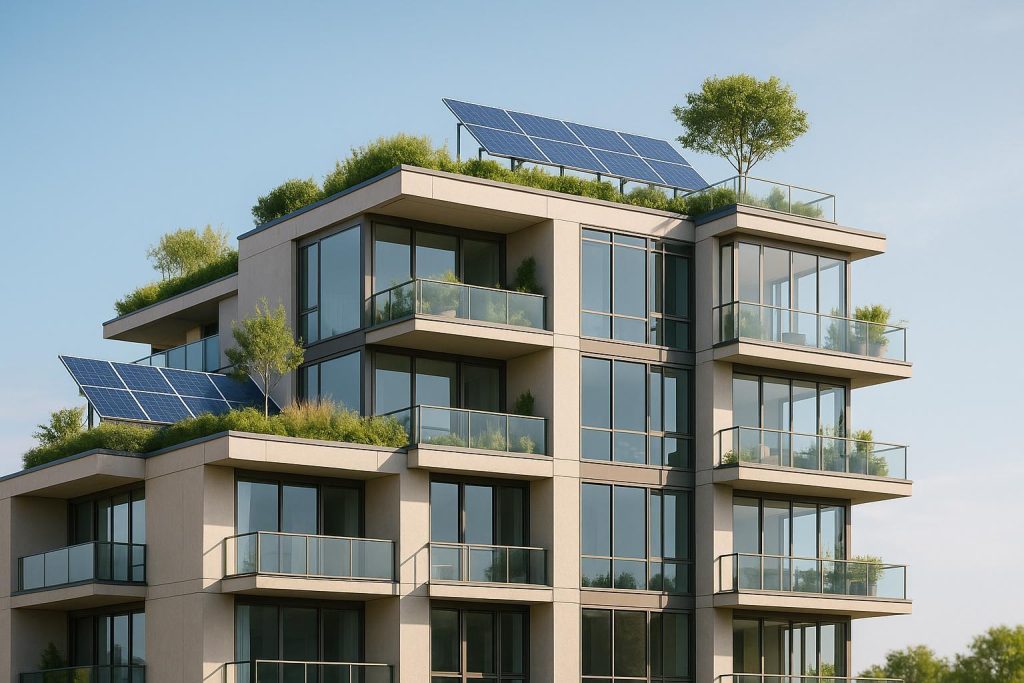
Beyond structural design, developers often select energy-efficient appliances for residential units. From low-energy dishwashers to smart thermostats, these items work together to lower the building’s overall energy demand. Renewable energy can also be part of the mix: some new developments add rooftop solar panels or geothermal systems to generate power on-site. While the up-front investment can be significant, these systems can reduce ongoing energy costs, enhance property values, and help meet local sustainability goals.
Water Conservation and Management
Water efficiency is another essential element of sustainable condos. Developers may install low-flow fixtures, including faucets and showerheads, that limit water usage without sacrificing functionality. Some projects incorporate rainwater collection systems for landscaping and irrigation, reducing reliance on treated potable water. Green roofs can also play a substantial role in water management by absorbing stormwater, helping with runoff control, and providing natural insulation. These features demonstrate that being mindful of resource efficiency doesn’t have to compromise quality. Instead, it can contribute to a more resilient housing infrastructure that values both communities and the ecosystems they depend on.
Even beyond low-flow fixtures, careful landscaping choices can conserve water. Native and drought-tolerant plants thrive with minimal watering, helping further reduce demand for irrigation. From an environmental standpoint, planting these flora can reintroduce biodiversity, offering local wildlife habitats and bringing nature closer to urban settings. Such measures enhance the overall livability of the condo while guarding vital natural resources for future generations.
Creating Healthier Indoor Environments
Sustainable design also centers on health and comfort. Green building frequently includes proper ventilation systems to reduce indoor air pollutants and maintain fresh airflow. Choices in paints, finishes, and adhesives can help maintain healthy air quality, especially when choosing products with low or zero volatile organic compounds (VOCs). Better air quality translates to fewer allergies, less respiratory irritation, and overall improvement in resident well-being.
Natural light is another factor that impacts health. Well-placed windows and skylights can reduce reliance on artificial lights during daylight hours while boosting mood and productivity. Beneficial community amenities might include fitness spaces, multi-purpose lounges, or green rooftops where residents can gather for relaxation or social interaction. By integrating nature into the building’s aesthetics and daily uses—whether through indoor plants, scenic courtyards, or shared rooftop gardens—developers can create purposeful spaces that feel calm and collectively owned.
Supporting Community and Reducing Transportation Impacts
One basic truth of sustainability is that no building exists in a vacuum. When a new condo fits well within its surrounding network of transit, shops, and services, it helps reduce traffic congestion and pollution. Proximity to buses, trains, or dedicated cycling routes can make a significant difference in residents’ daily habits. On-site bicycle storage or car-share partnerships can also encourage lower-emission travel. Moreover, when residents live close to local markets and community areas, they are more likely to connect with neighbors, support small businesses, and take pride in the region’s growth.
Some developers go further by setting aside areas for community-focused features. Examples could include spaces for farmers’ markets or local events, reinforcing a sense of place and belonging. Offering e-charging stations for electric vehicles is another forward-thinking initiative that reflects long-term planning and builds trust with tenants and prospective buyers. By creating convenient, forward-thinking infrastructure, new condo developments can serve as catalysts for positive urban evolution, well beyond the footprint of the building itself.
Long-Term Benefits and Property Value
The long-term value of a sustainable condo often extends past lower utility bills. Eco-friendly buildings typically enjoy stronger resale or rental potential, making them a wise investment for owners. Modern, efficient technologies tend to require fewer repairs, and conscientious design helps maintain structural integrity over time. Meanwhile, a focus on occupant well-being boosts resident loyalty and satisfaction, helping keep turnover low. In a competitive market, highlighting environmental and health benefits can set a condominium apart, reflecting how people increasingly value living options that align with their personal ethics and a sense of community-minded responsibility.
Because these buildings focus on resource efficiency, they often operate more smoothly. Their design remains relevant even as regulations evolve toward greener construction standards, meaning they’re less likely to require expensive retrofits in the future. Furthermore, sustainable condos often attract like-minded residents, building a sense of camaraderie around shared values. Such connections can boost local social networks and lead to better awareness of community initiatives.
Emphasizing Resilience and Adaptability
As climate patterns shift and extreme weather events increase, constructing with adaptability in mind becomes even more important. Resilient design ensures that building systems can handle rising temperatures, heavier storms, and potential resource constraints. This might involve reinforcing key structural elements, designing better drainage systems, or incorporating backup energy resources that maintain essential appliances or lighting in emergencies. By staying one step ahead, condo developers show their commitment to protecting residents, local wildlife, and broader municipal infrastructure. They demonstrate that sustainable architecture is about more than just a green label—it’s about future-proofing communities to stand the test of time.
Ways to Learn More or Take Action
For those considering new homes amid these emerging trends, it helps to see sustainable features in action. If you’re curious about future projects that combine eco-conscious design with modern condo living, you can Explore Our Projects to discover how resource efficiency, resilient infrastructure, and purpose-built solutions come together to serve local needs. Understanding the specifics—like solar power integration, recycled materials, and site selection—can guide your search for a home that truly aligns with your environmental values.
If energy efficiency and eco-friendly construction are on your must-have list, consider stepping inside a building that offers these features. Some renters or owners find that real-world examples are the most convincing proof of a developer’s responsible approach. To explore the possibility of living in a space designed for people and built with local contexts in mind, you can also View Available Rentals that may fit your lifestyle and location preferences. Seeing how these concepts translate into tangible living spaces can help make your decision clearer.
Looking Ahead
Sustainability in condo development is no longer just a buzzword—it’s a necessary component of modern urban growth. Projects that emphasize resource conservation, efficient building materials, and vibrant community connections offer a more holistic approach to city living. They demonstrate how responsible development can merge sophistication with stewardship. As environmental awareness continues to grow among residents, so does the demand for condos that are carefully conceived and responsibly managed.
Developers continue to refine these methods, from integrating green roofs to installing cutting-edge HVAC systems that enhance livability. In the years ahead, we may see further adoption of renewable power sources, advanced water recycling programs, and even more collaboration with local authorities to create well-planned neighborhoods. This new breed of condo is about balancing people’s needs with the health of the environment, uniting the best of modern life—comfort, convenience, and community—with respect for finite resources and ecological integrity.
By emphasizing resilience, efficiency, and the human experience of living spaces, developers transform simple buildings into forward-thinking homes. The commitment to sustainability creates a ripple effect throughout a neighborhood, improving quality of life and assisting broader efforts to reduce environmental impact. Ultimately, when modern condos are designed to support the planet, they also support the well-being of the people who call them home.
