

Understanding Condo Features and Amenities
When it comes to modern urban living, condominiums have become a popular choice for individuals, couples, and families seeking both convenience and a sense of community. Condos typically merge private living spaces with shared building amenities, creating an environment that balances personal comfort with neighborhood connectivity. But what exactly do condos come with? Below, we explore the features, amenities, and responsibilities that commonly accompany condos, along with factors that can help you decide whether condo living is right for you.
Private Living Spaces
Within your condo unit, you can typically expect a functional layout that includes:
- Bedroom(s): Most condos come with one or more bedrooms designed to maximize the available space, often featuring built-in closets or wardrobe storage.
- Bathroom(s): Modern condos generally have at least one well-appointed bathroom with fixtures such as a sink, toilet, shower, or bathtub, depending on the size and design of the unit.
- Kitchen: The kitchen area in a condo typically includes major appliances (such as an oven, stovetop, and refrigerator), along with cabinetry and countertops that optimize food preparation and storage space.
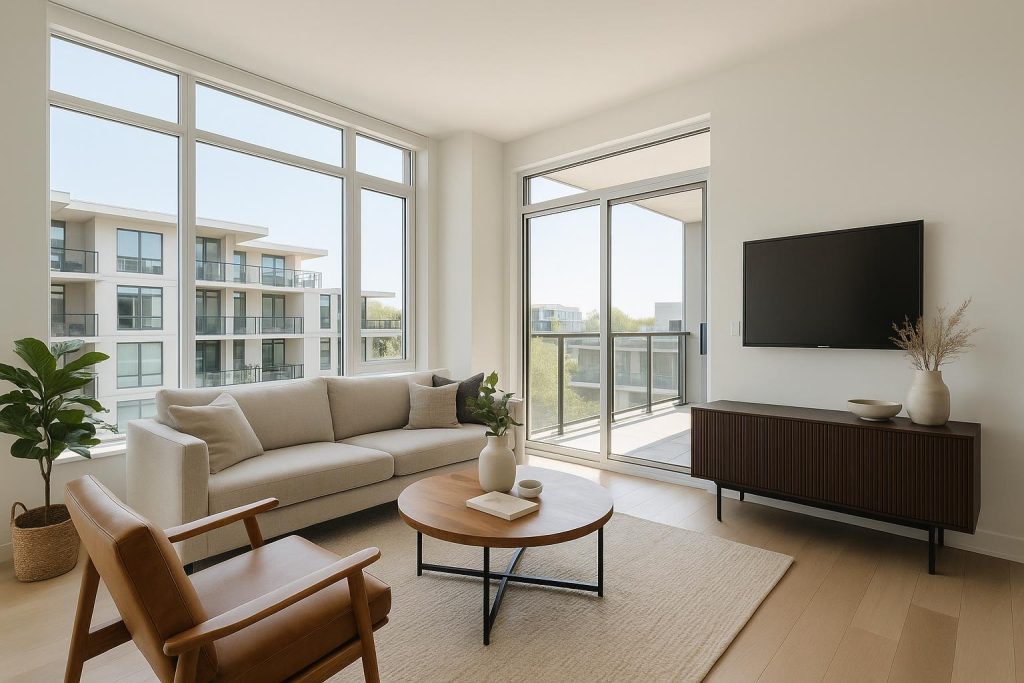
- Living and Dining Area: Most condo layouts feature an open-concept living and dining space. This design choice creates a sense of flow and flexibility, allowing you to arrange furniture in ways that fit your personal style. Even though condos can be smaller than traditional detached homes, thoughtful layouts often feel comfortable and efficient.
- In-Unit Laundry (Depending on the Building): Some condos include a dedicated laundry area with a washer and dryer. Where available, in-suite laundry provides added convenience and privacy.
Developers aiming for high-quality builds typically prioritize not just functionality but also aesthetics. For instance, attention might be given to natural light, ventilation, and long-lasting materials, ensuring that each room feels inviting and endures over time. Windows are often strategically placed to maximize light in living areas, while energy-efficient features may help manage costs and environmental impact.
Building Amenities
One of the major draws of condo living is the collective amenities available to residents within the building. While every property has its unique perks, some common shared amenities include:
- Fitness Centers: Many condos offer on-site gyms equipped with cardio machines, weightlifting stations, and sometimes designated yoga or studio spaces.
- Rooftop Terraces or Courtyards: These communal areas can provide outdoor seating, gardens, or even barbecuing stations, serving as gathering spots for socializing and leisure.
- Social Lounges: A lounge or party room is often included for residents to host events or relax with neighbors, offering a sense of community just steps from your home.
- Concierge or Front Desk Services: Larger condominium buildings may have a concierge to assist with package deliveries, visitor management, and information about local services.
- Meeting Rooms or Workspaces: Some modern buildings include shared work or conference areas to meet the growing need for home-based professionals seeking a quieter or more formal workspace.
- Security Features: Gated entries, secure parking, and surveillance systems are often part of the appeal, making residents feel safer than they might in some stand-alone locations.
These amenities can transform what might otherwise be a private living arrangement into a more interactive environment, providing spaces to meet neighbors, focus on wellness, or enjoy shared entertainment. In developments that emphasize long-term value and thoughtful design, amenities are often maintained carefully to retain a high standard of quality, helping create a sense of pride and stability for the entire building.
Community and Connection
Condo living can foster a sense of community, especially when amenities and public areas encourage social interaction. Building rules and guidelines can also help maintain communal harmony, thereby ensuring that common spaces remain safe and accessible to all. This concept of shared responsibility can extend beyond the interior of the building, with some developments working actively to engage with local culture and resources. Indeed, condos are frequently located in well-connected neighborhoods with easy access to public transit, grocery stores, restaurants, and additional services, supporting a lifestyle that is both convenient and enriching.
Maintenance and Fees
Condo living typically involves a homeowner association (HOA) or strata council that collects monthly fees. These dues go toward expenses such as hallway or lobby maintenance, landscaping, amenity upkeep, and sometimes building insurance. In exchange, individual owners often have fewer personal maintenance responsibilities compared to people who own standalone houses. For example, you generally do not need to manage roofing, exterior walls, or common areas yourself. This arrangement can be especially beneficial if you prefer freedom from certain chores or live a busy life. However, it’s important to understand that:
- Monthly Fees Vary: The monthly condo fee depends on several factors, including property size, the range of shared amenities, and the scope of maintenance the association covers.
- Reserve Funds: Part of your condo fees may be allocated to a contingency or reserve fund to cover future repairs and unexpected costs. A well-managed reserve fund can protect owners from sudden large assessments.
- Bylaws and Guidelines: Because you’re sharing a building with others, there may be specific rules around noise, renovations, or the use of amenities. Understanding these guidelines is crucial for peaceful communal living.
Sometimes prospective condo buyers or renters overlook these financial and practical considerations. However, a transparent approach to fees and maintenance ensures that the building, and your investment in it, remains secure over the long term.
Parking and Storage
Most condos come with a designated parking spot—either above ground or underground—and optional storage lockers. Parking availability can vary widely from building to building, particularly in urban areas. In some cities, condo buildings situate themselves near reliable public transit options, reducing the need for multiple parking spaces. Storage lockers offer a convenient spot for items like sporting goods, seasonal decorations, or small tools. In developments that focus on usability and livability, these storage areas are thoughtfully placed, adding another layer of practicality to the condo lifestyle.
Location and Transport Connectivity
Location is a key advantage of many condo properties. Developers often choose spots close to amenities such as shopping centers, workplaces, restaurants, and public transit hubs. This level of connectivity appeals to individuals who prefer a walkable lifestyle or who commute regularly. For those who place a premium on convenience—be it quick transit to workplace hubs or easy weekend strolls to local markets—condo living can be especially satisfying.
Design and Sustainability
In regions where demand for housing is high, such as urban or rapidly growing areas, condo developments continue to evolve in ways that prioritize both design and responsibility. Many developers now emphasize:
- Energy Efficiency: Insulated windows, efficient heating and cooling systems, and thoughtful material choices help reduce energy consumption and lower utility bills.
- Green Rooftops: Some modern condos integrate rooftop gardens or terraces that help insulate buildings and provide residents with outdoor leisure areas, connecting living spaces to nature even in denser city settings.
- Transit-Oriented Development: By building close to major transit lines, condos can encourage a car-free or car-lite lifestyle, reducing both emissions and traffic congestion for the broader community.
When carefully planned, these features enable a more sustainable lifestyle for residents. Local architecture and design choices can result in condo buildings that feel at home in their neighborhoods, reflecting the surrounding environment while also offering modern comforts.
Comparing Condos to Other Housing Options
The concept of a condo often gets compared to other forms of housing, especially rental apartments or single-family homes. While condos and traditional apartment rentals can appear similar, a key distinction lies in ownership structure. In a condo, each unit is individually owned, with shared responsibility for common elements. In contrast, an apartment building is typically owned by a single entity. Owning a condo can allow you to build equity, while renting might be more flexible but may not carry the same long-term investment potential. When deciding on a condo, it’s essential to consider factors like monthly fees, your desired level of personal responsibility, and your readiness to commit to a specific building and community.
Responsibility and Lifestyle
One of the central aspects of condo living is the balance between private ownership and communal oversight. The building’s rules might shape your day-to-day life in ways that differ from living in a detached home. This dynamic can be positive: fewer maintenance tasks, shared security costs, and access to multiple amenities you might not otherwise afford on your own. At the same time, homeowners must be comfortable navigating any regulations set by the condominium board or strata council. Reading through bylaws and meeting notes, if available, helps you understand the building’s approach to noise restrictions, renovations, and shared space usage.
Exploring Purpose-Built Condos
While many condos begin as ownership models, some developments are purpose-built to offer a rental component. In these settings, the building and its amenities still reflect many of the characteristics described above—functional kitchens, shared lounges, and well-maintained grounds. The difference rests in the rented status of each unit and the building management’s dedication to creating a positive experience for tenants. For people who want the community feel of condo living without taking on the ownership component, purpose-built rentals can be an appealing alternative.
If you’re curious about how purpose-built communities are planned and managed, you might explore rental portfolios in your city. For example, visiting the Projects page of a developer can provide insights into what’s included in modern condo or multi-residential buildings, from bike storage to well-curated amenity spaces. Learning about different layouts and design processes can help you better envision the overall lifestyle.
Tips Before You Buy or Rent
- Evaluate Fees: Investigate the monthly condo or strata fees and how they’re utilized. Adequate reserve funds can reflect solid planning for maintenance and unexpected repairs.
- Tour Amenities: If possible, arrange to see the gym, lounge, or rooftop space. Make sure you understand the hours of operation and any usage guidelines.
- Review Bylaws: In any shared-living scenario, rules matter. Confirm that you’re comfortable with noise policies, renovation restrictions, and guidelines around shared spaces.
- Ask About Security: Features like locked entries, cameras, or key fob systems can be important for peace of mind.
- Check Parking and Storage Options: Parking spots, guest parking availability, and additional storage can all impact daily comfort.
Taking these steps not only helps you make an informed decision; it also ensures that your condo living experience meets both your expectations and your budget.
Conclusion: Embracing Condo Living
Condos can offer a seamless blend of private comfort and community engagement. From well-outfitted kitchens and in-suite laundry to shared amenities like fitness centers and social lounges, they’re designed to cater to a range of lifestyles. Beyond the functionality of each unit, condominium communities can promote connections among neighbors—offering spaces to gather, socialize, or simply enjoy a sense of safety within a dedicated building environment.
Wherever you plan to call home, remember to research the specific offerings of a building, from security amenities to sustainability features, to ensure it aligns with your lifestyle and values. Responsible, well-managed developments strike a balance between individual comfort and collective well-being, ensuring that a condo is not just a place to live, but also a reliable investment in the future. By understanding what condos typically come with and how they differ from other housing options, you can find the right fit for your needs—whether you’re seeking a steady rental home, an investment property, or a carefully designed space to settle in for the long term.
