

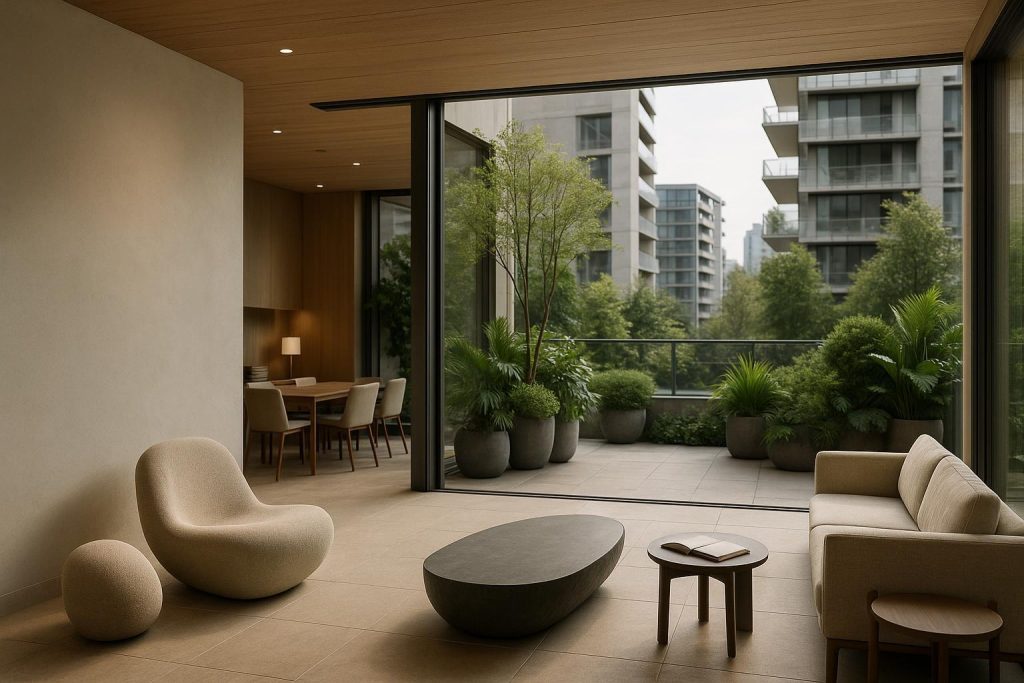
What Sets Premium Condo Amenities Apart
Premium condo amenities are shared spaces, services, building systems, and in-suite features that make daily life more comfortable, convenient, secure, and connected. They are not defined by one dramatic feature alone. Instead, they reflect a thoughtful approach to how residents exercise, work, welcome guests, receive deliveries, spend time outdoors, and move through the building each day.
The strongest amenity packages are designed for people, not simply added to a marketing list. A well-planned fitness room that residents can use often may offer more value than an elaborate space that is difficult to access or costly to maintain. The same is true of lounges, terraces, workspaces, security systems, and sustainable building features. Quality, usefulness, accessibility, and long-term care are what turn amenities into a meaningful part of condo living.
While every building is different, premium condo amenities commonly fall into several connected categories: wellness, social and outdoor space, work and convenience, security, technology, sustainability, and attentive property management. Prospective buyers and renters should look at both the range of features and how well those features suit their own routines.
Wellness and active-living spaces
A modern fitness centre is one of the most recognizable high-end condo amenities. It can reduce the need to travel to a separate gym and makes it easier to fit movement into a busy day. In a premium building, the focus is usually on a clean, functional layout, durable equipment, good ventilation, and room to move safely.
- Fitness centres may include cardio machines, free weights, resistance equipment, stretching areas, and space for guided or self-led workouts.
- Yoga, meditation, or multi-purpose rooms can support quiet exercise, mobility work, and small classes.
- Wellness facilities may include a sauna, steam room, treatment space, or a calm area for rest, depending on the project.
- Outdoor activity areas can include walking paths, landscaped courtyards, or space for light exercise.
These amenities are especially useful when they are easy to reserve, open at practical hours, and maintained consistently. For a closer look at what buyers and renters may find, read whether on-site fitness facilities are standard in high-end condo buildings and how spa and wellness facilities fit into premium condo developments.
Social rooms, lounges, and outdoor gathering areas
Premium condos often extend living space beyond the private suite. Shared social areas give residents a comfortable setting to meet neighbours, host a small gathering, or simply change their routine without leaving home. These spaces can support a stronger sense of community when they are inviting, flexible, and easy to use.
Common features include a resident lounge, a party room with a kitchen, a dining space for private events, or a games and media room. Good design matters: natural light, durable finishes, comfortable seating, accessible washrooms, and clear booking rules can have a major impact on how often a space is used.
Rooftop terraces are another sought-after feature. They may offer seating, dining tables, barbecue areas, shade structures, planting, and views of the surrounding neighbourhood. A terrace creates an outdoor place to relax or gather without requiring a large private balcony. Learn more about how a rooftop terrace can enhance the condo living experience.
For households with different ages and routines, flexible common areas can be especially valuable. A well-designed community room may host a child’s birthday, a family dinner, a book club, or a quiet afternoon of reading. See how higher-end condo amenities can serve families for more considerations.
Work-from-home and practical convenience
As remote and hybrid work have become more common, dedicated work areas have become an important premium amenity. A coworking lounge or business centre provides an alternative to working at a kitchen table or taking a video call from a private suite. It can also give residents a professional, quiet place for focused tasks.
- Coworking lounges may provide shared tables, individual workstations, power outlets, and reliable wireless internet.
- Private meeting rooms can be useful for video calls, interviews, or small meetings that need privacy.
- Package rooms and secure lockers simplify delivery pickup and help protect parcels when residents are away.
- Secure bike storage and repair areas support cycling as a practical everyday transportation choice.
- Guest suites, where available, allow visitors to stay nearby without placing extra pressure on a resident’s own home.
These features may seem modest compared with a rooftop terrace, but they can have a greater effect on day-to-day livability. Secure deliveries, organized storage, and a useful work area save time and reduce friction. For more detail, explore whether upscale condominiums usually include coworking or business lounges.
Security, privacy, and peace of mind
Security is a core part of a premium residential experience. It should support safety while also allowing residents and guests to move through the building with ease. The best systems combine well-considered building design, reliable technology, and clear operating procedures rather than relying on a single feature.
Depending on the building, security measures may include controlled entry doors, key fobs or mobile access, video intercoms, cameras in appropriate common areas, well-lit parkades and paths, secure parcel storage, and a staffed concierge or front desk. Some buildings may also use access controls for elevators, amenity rooms, and bike areas.
It is worth asking how security is managed in practice. Are access credentials updated when residents move? Who responds to an after-hours concern? Are cameras monitored or reviewed only after an incident? How are guest access and delivery access handled? Clear answers can help residents assess whether the system supports real peace of mind. Read what security measures to expect in a premium condo complex for a more detailed overview.
Smart-home features and reliable building technology
Technology can add value when it is simple, secure, and useful. In-suite smart-home features may allow residents to adjust heating or cooling, control lighting, receive building notices, or manage entry from a phone. Some buildings also provide digital booking for amenities, visitor registration, and notifications for package deliveries.
However, technology should not replace good building design or dependable service. Before choosing a condo, ask whether the systems work without a phone, how resident information is protected, and who provides support if an app or access device fails. A simple, dependable system is often more valuable than a complex one with features residents rarely use.
Sustainable features that support long-term value
Environmental design is increasingly part of what makes a condo amenity package premium. Energy-efficient lighting and appliances, low-flow fixtures, high-performance windows, waste and recycling areas, and electric vehicle charging can help lower resource use while improving daily convenience. Landscaped roofs, native planting, and water-wise outdoor design may also contribute to a healthier building environment.
These elements should be assessed as part of the building’s wider approach to sustainability. For example, electric vehicle charging is most useful when the number of stations, access process, and future expansion plan are clear. Likewise, bike storage works best when it is secure, accessible, and sized for the community. Explore environmental and sustainable elements found in top-tier condo amenities to understand what to look for.
How to evaluate amenities before choosing a home
Amenities can improve everyday life, but they should be weighed against location, layout, construction quality, operating costs, and your own priorities. During a tour or review of a project, consider these questions:
- Which amenities would you use weekly rather than only occasionally?
- Are common areas bright, accessible, well maintained, and large enough for the number of homes?
- What are the booking rules, hours, guest policies, and any use charges?
- How is the building managed, cleaned, repaired, and secured?
- Will the amenities contribute to ongoing condo fees, and is there a clear maintenance plan?
- Do the building’s sustainability features support practical, lower-impact living?
More amenities can mean higher operating and maintenance needs, so value is not just about quantity. It is about choosing features that residents will genuinely use and that the building can responsibly maintain over time. For guidance on this trade-off, review how the number of premium amenities may affect condo fees.
Ultimately, premium condo amenities should make a home feel more functional, comfortable, and connected to the people around it. When they are thoughtfully planned and well cared for, they add lasting value to both the resident experience and the wider neighbourhood. To see how Vittori approaches livable, community-minded residential development, explore our Projects or contact our team with questions about current or upcoming communities.
